Lime removal in bathroom and kitchen? This is the best method

Lime removal in the bathroom is a job everyone recognises. Hard water leaves small lime particles on glass, tiles, grouting and taps every day. If you don't tackle this in time, it creates a hard layer that is difficult to get rid of. In this blog you will read exactly how to remove limescale, which remedies really work and how to prevent the deposit from coming back quickly.
How does limescale occur?
Lime scale is caused by hard water. That water contains minerals such as calcium and magnesium. When the water evaporates or is heated, these minerals are left behind as a white, hard layer.
You see this especially in places where hot water is often used: taps, tiles, shower walls, glass doors and toilets. The coating starts as a dull haze and gets progressively harder. Ordinary cleaning products no longer get rid of it.
It causes dull surfaces, discoloured joints, less shine and more wear and tear. This is why regular descaling is important.
Which resources work and which do not
Many people try to remove limescale with agents that are not suitable. This often happens:
- All-purpose cleaner: this removes dirt but not limescale.
- Cleaning vinegar: works for light scale, but not for thick or old scale.
- Scrubbing: takes a long time and damages tiles and glass.
If you want quick results, use a powerful descaler. The best option is a product that sticks to the surface, allowing it to act calmly.
Lime removal is how you do it:
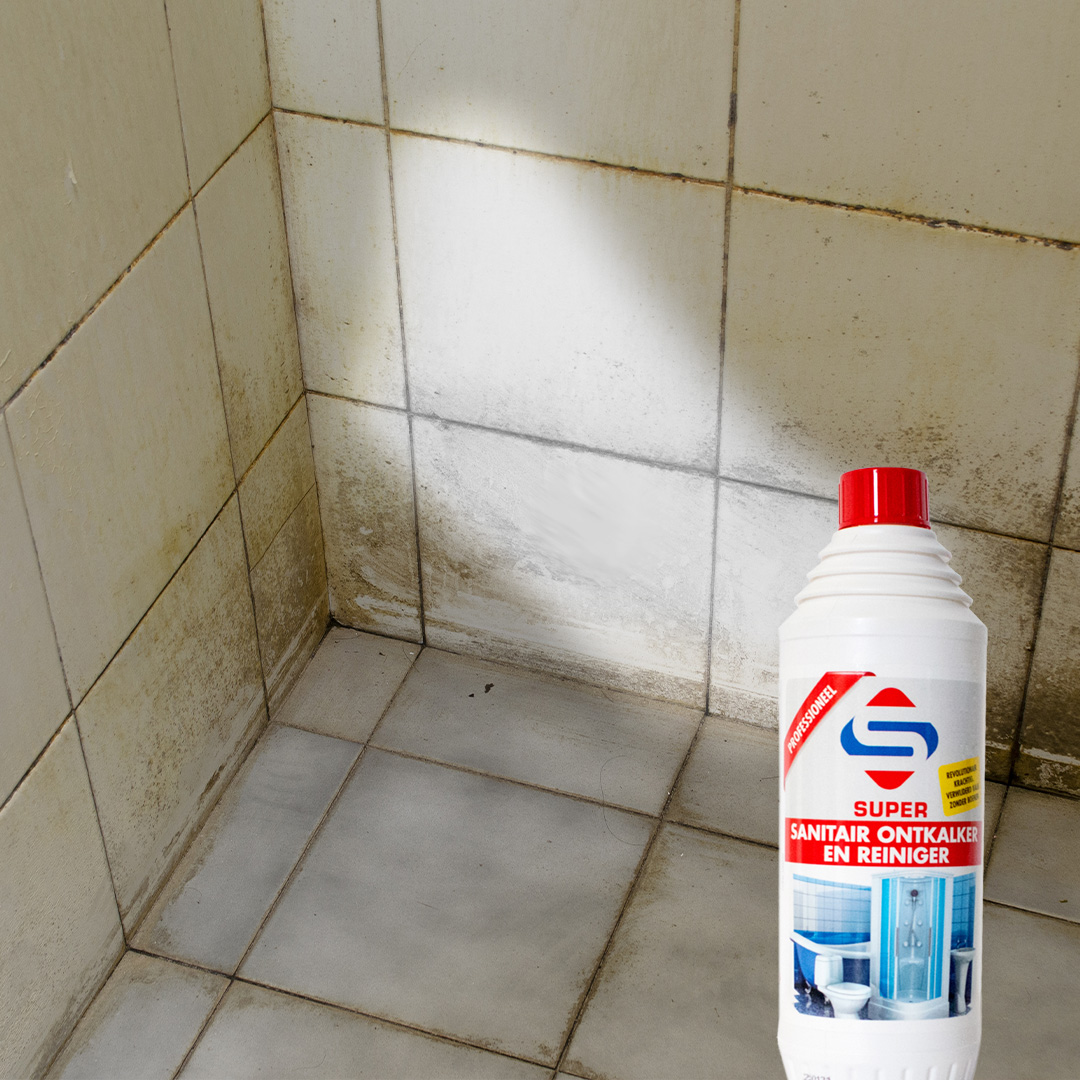
To remove limescale, you work fastest with a powerful descaling gel. The Super Sanitary Descaler and Cleaner is such a gel. Its thick texture means the product stays right where you apply it. This gives the active ingredients time to soak in, quickly loosening limescale, urine scale and light rust.
The gel is designed for sanitaryware. That means it adheres safely to smooth surfaces such as glass, ceramic and chrome. The formula works strongly but in a controlled way, so you remove limescale without damaging the surface. Its instant action means you can see a difference within seconds.
Super Sanitary Descaler is designed to quickly loosen thick, old or stubborn limescale. This means you need less product and don't have to scrub for long periods of time. Keep in mind one important rule, though: never use the gel on natural stone, as it can damage limescale.
Read more about removing limescale on different surfaces below.
Lime removal in shower and on tiles
Shower glass calcifies fastest. The white haze is caused by dried drips. Tiles and joints can also turn grey.
This is how you clear the shower:
- First degrease shower wall and tiles with Super Degreaser or Super Heavy Cleaner.
- Apply the Super Sanitary Descaler to the surface and allow the product to act for 30 seconds
- Scrub the surface with a Super Scouring Pad or a scouring sponge (scratch-free)
- Rinse off the sanitary cleaner with warm water
For large areas, apply the gel in bands for even results.
In addition, if you suffer from discoloured joints or sealant edges, use additional the Super Grout and Weather spot cleaner. This also picks up light lime residue around edges and joints.
Order online via our partners
Ordering SuperCleaners products online is easy and fast via the webshops of our official sales partners.










Decalcifying the tap
Taps lose shine and get white deposits around the base and on the spout.
Here's how to tackle this:
- Dampen/wet the taps with warm water
- Spray the Sanitary Cleaner on the taps
- Leave on briefly
- Use a non-scratch sponge or the super scouring sponge to clean the tap
- Rinse with plenty of water
- If desired, you can buff the taps with a clean (microfibre) cloth
Descaling the toilet
Lime and urine stone form a hard, yellowish-brown layer below the waterline.
Here's how to remove it safely:
- Spray the Sanitary Cleaner under the toilet rim and in the bowl
- Let this sink in for 1 minute
- Use the toilet brush to clean the toilet bowl under the rim and inside the bowl
- Let it sink in a little longer
- Flushing the toilet
For stubborn deposits, you can repeat the treatment.
Cleaning joints and sealant edges
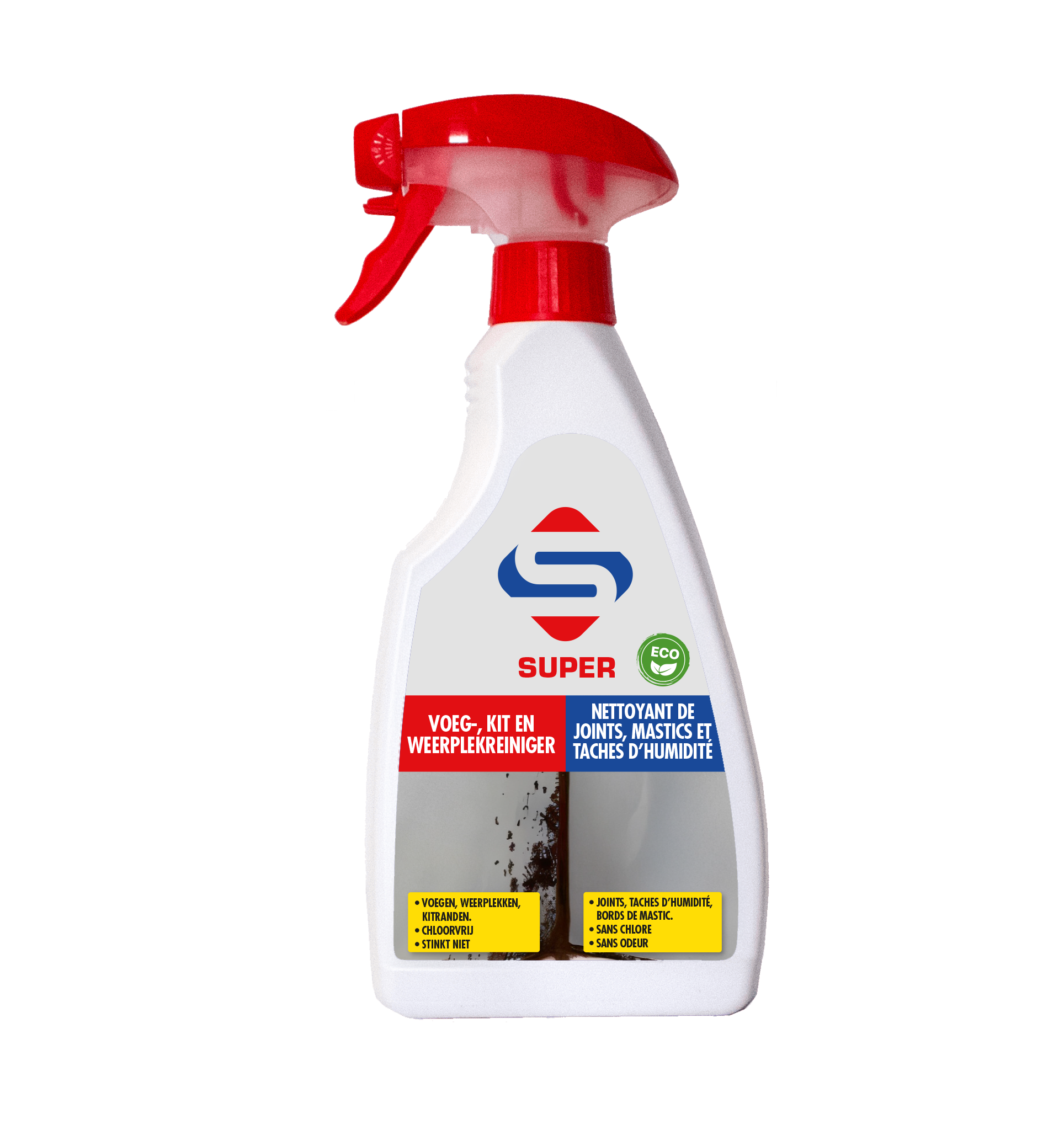
For grout and sealant edges, use Super grout and weather spot cleaner. This product contains active chlorine and removes discolouration, scale and mould spots. Ideal for sanitary areas.
It also works well on light chalk around sealants and tile edges.
- Spray the surface to be cleaned
- After spraying, wipe off with water and sponge; in case of heavy soiling, leave on for 2-15 minutes, do not allow to dry completely
- For overhead spray applications, always use safety goggles and avoid inhaling the spray mist
- Ensure adequate ventilation when used in confined spaces (e.g. open window or extractor)
- Can be safely used on steel, stainless steel, ceramics, glass and plastics. Not suitable for cleaning soft metals such as zinc, brass, bronze, galvanised surfaces, among others
Check out Super Joint & Weather Leak Cleaner on our website now for more information.
Common mistakes when removing limescale
Lime removal often goes wrong due to wrong products or improper practices. These mistakes make the surface dull or damaged faster and actually cause lime to return faster.
- Waiting too long to descale: The longer lime remains, the harder the layer becomes. You then need more product and the risk of damage increases.
- Use abrasives that cause scratches: hard scouring sponges and abrasives seem convenient, but they dull glass, tiles and taps. Scratches are also more likely to attract dirt and limescale later on.
- Use acidic agents on natural stone: vinegar, lemon and strong decalcifiers directly attack lime-laden stones. The damage is permanent and the surface becomes visibly dull.
- Not rinsing properly: cleaning residues dry up as a haze and later create streaks or stains again. Rinsing with warm water is essential for beautiful results.
- Mixing products: decalcifiers and chlorine do not mix. Mixing agents can produce dangerous fumes. Always use one product at a time and ensure ventilation.
Important: Never use an acidic descaler on natural stone.
How to prevent limescale?
With a few simple habits, you can prevent limescale from building up quickly in the bathroom. As a result, you will need to descale less often and glass, tiles and taps will stay beautiful for longer.
- Towel dry after every shower: water that remains immediately forms new limescale stains. With a puller or cloth, the surface is dry in seconds.
- Wipe down taps and tiles after use: a quick wipe with a microfibre cloth prevents drips from drying up as white deposits.
- Ventilate after showering: good air circulation allows moisture to evaporate faster. Less moisture means less scaling.
- Regular light cleaning: a quick cleaning prevents limescale from adhering. This will keep a deep descale from happening for longer.
- Use a water softener: for hard water, a softener helps reduce limescale. This saves a lot of cleaning work and extends the life of plumbing fixtures.
Getting started!
If you want to quickly and thoroughly remove limescale in the bathroom, shower or toilet, then The Super Sanitary Descaler your solution. The powerful gel works instantly and makes a visible difference.
For discoloured joints and sealant edges use additionally the Super Grout and Weather spot cleaner.
Check out the outlets on our website and choose your supplier. This will get you started right away for a clean and limescale-free bathroom.
Locations
Here you can find the shops where our products are sold!
